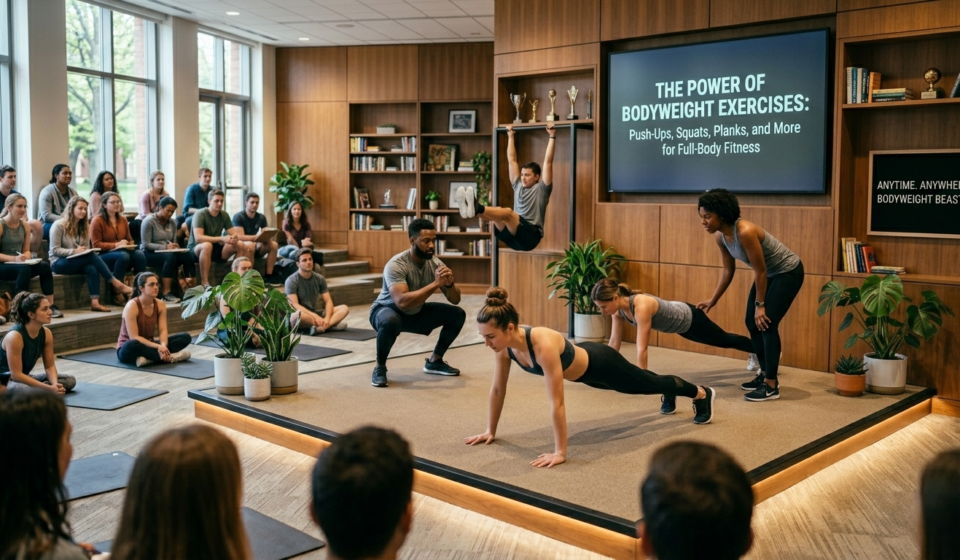

If you’re looking for a simple, affordable, and highly effective way to stay fit, bodyweight exercises are one of the best solutions. Exercises like push-ups, squats, planks, lunges, and mountain climbers require little to no equipment, can be done almost anywhere, and deliver incredible health benefits for people of all fitness levels. Whether you are a beginner starting your fitness journey or someone looking to improve strength and endurance, these classic exercises can help transform your body and overall health.
Inspired by fitness and wellness topics featured on Global Blogs 365 Health Category, this guide explores the benefits of bodyweight training, explains how to perform popular exercises correctly, and provides tips to maximize your results.
Why Bodyweight Exercises Matter
Modern lifestyles often involve long hours of sitting, reduced physical activity, and increased stress. Regular exercise is essential not only for maintaining a healthy body but also for improving mental well-being. Bodyweight exercises are particularly valuable because they combine strength training, flexibility, balance, and cardiovascular fitness into one convenient workout style.
Some key benefits include:
- Improved muscle strength
- Better posture and balance
- Increased flexibility and mobility
- Enhanced heart health
- Weight management
- Reduced risk of chronic diseases
- Better mood and reduced stress
- Increased energy levels
Unlike gym machines that isolate muscles, bodyweight exercises train multiple muscle groups simultaneously. This helps improve functional fitness, meaning your body becomes stronger for everyday activities like walking, climbing stairs, lifting objects, and maintaining good posture.
1. Push-Ups: The Ultimate Upper-Body Exercise
Push-ups are among the most effective bodyweight exercises because they target several muscle groups at once, including the chest, shoulders, triceps, and core.
Benefits of Push-Ups
Push-ups offer numerous advantages:
- Build upper-body strength
- Improve core stability
- Enhance shoulder mobility
- Strengthen chest muscles
- Increase muscular endurance
They also help improve posture by strengthening the muscles responsible for keeping your shoulders aligned.
How to Perform a Push-Up Correctly
- Start in a high plank position.
- Place your hands slightly wider than shoulder-width apart.
- Keep your body in a straight line from head to heels.
- Lower your chest toward the floor while keeping elbows slightly tucked.
- Push yourself back up to the starting position.
Common Mistakes
- Letting hips sag
- Raising the hips too high
- Flaring elbows excessively
- Incomplete range of motion
Beginner Modification
If regular push-ups are difficult, begin with:
- Wall push-ups
- Knee push-ups
- Incline push-ups using a bench or table
As strength improves, transition gradually to standard push-ups.
2. Squats: The Foundation of Lower-Body Strength
Squats are one of the best exercises for building lower-body power and stability. They primarily work the quadriceps, hamstrings, glutes, and calves.
Benefits of Squats
Squats help:
- Build strong legs and glutes
- Improve balance and coordination
- Strengthen joints and bones
- Burn calories efficiently
- Enhance athletic performance
They are also highly functional because the squatting movement mimics everyday activities like sitting and standing.
How to Do a Proper Squat
- Stand with feet shoulder-width apart.
- Keep your chest lifted and core engaged.
- Bend your knees and push your hips back.
- Lower until thighs are parallel to the floor.
- Push through your heels to stand back up.
Tips for Better Squats
- Keep knees aligned with toes
- Avoid rounding the back
- Maintain even weight distribution
- Focus on controlled movement
Squat Variations
Once comfortable with standard squats, try:
- Jump squats
- Sumo squats
- Bulgarian split squats
- Pulse squats
These variations add intensity and challenge different muscle groups.
3. Planks: Core Strength and Stability
Planks may look simple, but they are one of the most effective exercises for strengthening the entire core.
Benefits of Planks
Planks strengthen:
- Abdominal muscles
- Lower back
- Shoulders
- Glutes
- Hip stabilizers
A strong core supports better posture, reduces back pain, and improves athletic performance.
How to Perform a Forearm Plank
- Place forearms on the floor.
- Extend legs behind you.
- Keep body in a straight line.
- Engage your core and glutes.
- Hold the position without allowing hips to drop.
Common Plank Mistakes
- Holding breath
- Dropping hips
- Raising hips too high
- Looking upward excessively
Plank Variations
To make planks more challenging:
- Side planks
- Plank shoulder taps
- Plank leg lifts
- High planks
Even holding a plank for 20–30 seconds daily can significantly improve core strength over time.
4. Lunges: Improving Balance and Leg Strength
Lunges are excellent for strengthening the lower body while improving coordination and balance.
Benefits of Lunges
Lunges help:
- Build stronger glutes and thighs
- Improve balance
- Correct muscle imbalances
- Increase flexibility
- Enhance stability
Because lunges work one leg at a time, they are especially useful for developing equal strength on both sides of the body.
How to Perform a Basic Lunge
- Stand upright.
- Step one foot forward.
- Lower your body until both knees form 90-degree angles.
- Push back to the starting position.
- Repeat on the other side.
Variations
- Walking lunges
- Reverse lunges
- Side lunges
- Jump lunges
Each variation targets muscles differently and keeps workouts interesting.
5. Mountain Climbers: Cardio and Core Combined
Mountain climbers combine cardiovascular training with core strengthening.
Benefits of Mountain Climbers
This exercise:
- Burns calories quickly
- Improves cardiovascular endurance
- Strengthens the core
- Increases agility
- Engages the entire body
How to Do Mountain Climbers
- Start in a high plank position.
- Bring one knee toward your chest.
- Quickly switch legs in a running motion.
- Keep your core tight throughout.
Mountain climbers are ideal for high-intensity interval training (HIIT) workouts.
6. Burpees: Full-Body Conditioning
Burpees are challenging but incredibly effective for improving overall fitness.
Benefits of Burpees
They help:
- Burn fat efficiently
- Improve endurance
- Build strength
- Increase heart rate
- Strengthen multiple muscle groups
How to Perform a Burpee
- Begin standing.
- Squat down and place hands on the floor.
- Jump feet back into a plank.
- Perform a push-up (optional).
- Jump feet forward.
- Explode upward into a jump.
Burpees can be modified for beginners by removing the push-up or jump.
Creating a Simple Bodyweight Workout Routine
A balanced workout should target different muscle groups and include both strength and cardio components.
Beginner Routine
Warm-Up (5 Minutes)
- Arm circles
- Jumping jacks
- Marching in place
- Dynamic stretches
Main Workout
- Push-ups: 10 reps
- Squats: 15 reps
- Plank: 30 seconds
- Lunges: 10 reps per leg
- Mountain climbers: 20 reps
- Burpees: 8 reps
Repeat the circuit 2–3 times.
Cool Down
- Hamstring stretch
- Shoulder stretch
- Deep breathing
- Child’s pose
The Importance of Consistency
Many people start exercising with enthusiasm but struggle to stay consistent. The key to seeing results is regular practice rather than extreme workouts.
Tips for Staying Consistent
Set Realistic Goals
Start small and gradually increase intensity.
Create a Schedule
Exercise at the same time each day to build a habit.
Track Progress
Record your workouts and improvements.
Focus on Progress, Not Perfection
Missing one workout doesn’t mean failure.
Make Workouts Enjoyable
Listen to music, exercise outdoors, or work out with friends.
Nutrition and Recovery Matter Too
Exercise alone is not enough for optimal health. Proper nutrition and recovery are equally important.
Healthy Eating Tips
- Eat more whole foods
- Stay hydrated
- Include lean protein sources
- Consume fruits and vegetables daily
- Avoid excessive processed foods
Recovery Tips
- Sleep 7–9 hours
- Stretch regularly
- Allow muscles time to recover
- Avoid overtraining
Recovery is when muscles repair and grow stronger.
Mental Health Benefits of Exercise
Physical activity does more than improve appearance. It also has powerful effects on mental health.
Regular exercise can:
- Reduce anxiety
- Improve mood
- Boost self-confidence
- Increase focus
- Lower stress levels
Exercises like planks, squats, and push-ups can release endorphins, often called “feel-good hormones,” which naturally improve emotional well-being.
Bodyweight Exercises for All Ages
One of the greatest advantages of bodyweight exercises is accessibility. People of all ages can benefit from them.
For Beginners
Start slowly with modified versions.
For Older Adults
Focus on controlled movements and balance exercises.
For Athletes
Add advanced variations and higher intensity.
Because bodyweight training is adaptable, it suits nearly every fitness level.