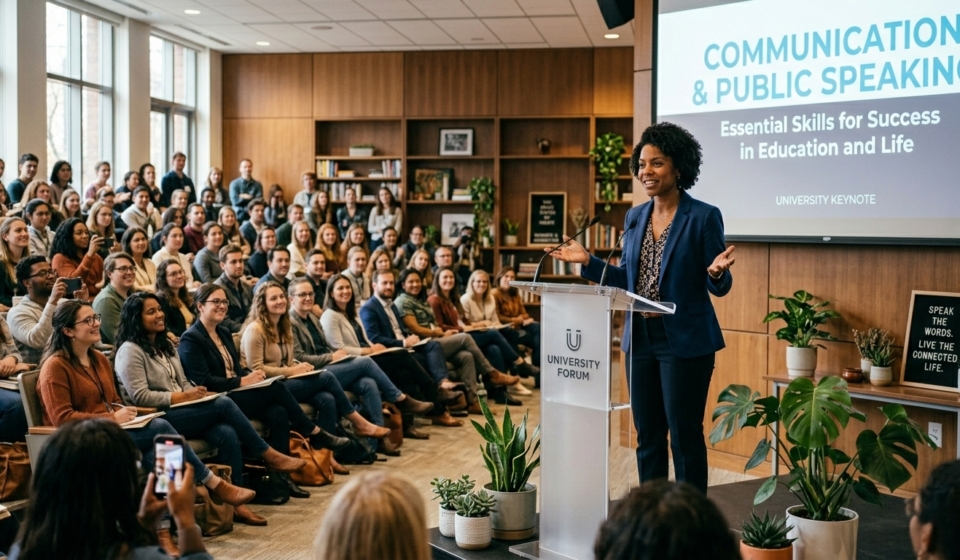

In today’s fast-moving world, communication is no longer just an optional skill—it is a necessity. Whether in classrooms, workplaces, interviews, social gatherings, or online meetings, the ability to express ideas clearly and confidently plays a major role in personal and professional success. Among all forms of communication, public speaking stands out as one of the most powerful skills a person can develop.
Many students and professionals fear speaking in front of an audience. Sweaty palms, nervous voices, and racing hearts are common experiences before giving a speech or presentation. However, public speaking is not a talent reserved for a few gifted individuals. It is a learnable skill that improves with practice, preparation, and confidence.
Communication and public speaking help individuals share ideas, influence people, build relationships, and create opportunities. In education especially, these skills empower students to participate actively, perform better academically, and prepare for future careers.
Understanding Communication
Communication is the process of exchanging information, thoughts, emotions, and ideas between people. It can happen through speaking, writing, gestures, body language, facial expressions, or digital platforms. Effective communication means the message is clearly understood by the listener or audience.
Communication generally includes four main elements:
- Sender – the person delivering the message
- Message – the information being shared
- Medium – the method used for communication
- Receiver – the person receiving the message
Good communication requires clarity, confidence, listening skills, and understanding. Poor communication often leads to confusion, misunderstandings, and conflict.
Types of Communication
1. Verbal Communication
This includes spoken words used during conversations, presentations, speeches, interviews, and discussions.
2. Non-Verbal Communication
Body language, eye contact, posture, gestures, and facial expressions are powerful forms of communication. Sometimes, non-verbal communication speaks louder than words.
3. Written Communication
Emails, reports, essays, text messages, and articles are examples of written communication. Clear writing is essential in education and professional life.
4. Visual Communication
Charts, graphs, slides, videos, and images help communicate information effectively, especially during presentations.
What is Public Speaking?
Public speaking is the act of speaking before an audience to inform, motivate, educate, or entertain. It can take place in classrooms, seminars, conferences, meetings, debates, or social events.
Public speaking is not just about delivering speeches. It involves:
- Organizing thoughts
- Presenting ideas clearly
- Engaging the audience
- Using confident body language
- Managing nervousness
- Communicating with impact
A strong public speaker can inspire people, influence decisions, and create lasting impressions.
Importance of Communication Skills in Education
Communication skills are extremely important for students, teachers, and educational institutions. They support learning, collaboration, and personal growth.
1. Improves Academic Performance
Students with strong communication skills participate more in class discussions, ask questions confidently, and express their ideas clearly in assignments and presentations.
2. Builds Confidence
Good communication increases self-confidence. Students who can express themselves effectively often feel more comfortable in social and academic situations.
3. Enhances Teamwork
Group projects and collaborative learning require students to communicate ideas, solve problems, and work together efficiently.
4. Develops Leadership Skills
Leaders must communicate clearly and inspire others. Students who practice communication early often become better leaders later in life.
5. Prepares Students for Careers
Almost every profession requires communication skills. Employers value candidates who can speak confidently, interact professionally, and present ideas effectively.
Why Public Speaking Matters
Public speaking is one of the most valuable life skills because it impacts education, career development, and personal growth.
1. Career Advancement
Professionals often need to deliver presentations, attend meetings, pitch ideas, or lead teams. Public speaking helps individuals stand out in competitive workplaces.
2. Persuasion and Influence
Strong speakers can motivate and influence others. Politicians, teachers, entrepreneurs, and business leaders rely heavily on public speaking.
3. Personal Growth
Public speaking improves confidence, critical thinking, organization, and emotional control.
4. Better Social Skills
People who speak confidently often communicate better in everyday conversations and social interactions.
5. Creates Opportunities
Public speaking can open doors to leadership roles, scholarships, networking opportunities, and professional success.
Common Fear of Public Speaking
Fear of public speaking is extremely common and is often called glossophobia. Many people feel nervous because they fear making mistakes, forgetting content, or being judged by others.
Common symptoms include:
- Fast heartbeat
- Sweating
- Shaking hands
- Dry mouth
- Nervous voice
- Anxiety
The good news is that fear can be overcome with practice and preparation.
Tips to Improve Communication Skills
1. Become a Good Listener
Communication is not only about speaking. Active listening helps individuals understand others better and respond appropriately.
2. Practice Clear Speaking
Speak slowly, clearly, and confidently. Avoid using unnecessary filler words like “um” or “you know.”
3. Expand Vocabulary
Reading books, articles, and newspapers helps improve language skills and vocabulary.
4. Improve Body Language
Maintain eye contact, smile naturally, and use open body posture to appear confident and approachable.
5. Engage in Conversations
Regular conversations improve fluency and confidence in expressing ideas.
6. Use Technology Wisely
Online communication through emails, presentations, and virtual meetings also requires professionalism and clarity.
Tips to Become a Better Public Speaker
1. Prepare Thoroughly
Preparation is the foundation of successful public speaking. Understand the topic well and organize ideas logically.
A simple speech structure includes:
- Introduction
- Main points
- Conclusion
2. Practice Regularly
Practice in front of a mirror, record yourself, or rehearse before friends and family.
3. Know Your Audience
Understand who the audience is and adjust language and examples accordingly.
4. Start with Confidence
A strong opening captures attention immediately. Questions, facts, stories, or quotes can make introductions more engaging.
5. Maintain Eye Contact
Eye contact creates connection and trust between the speaker and audience.
6. Control Nervousness
Take deep breaths and pause when needed. Nervousness often decreases after the first few minutes of speaking.
7. Use Body Language Effectively
Hand gestures, facial expressions, and movement make speeches more dynamic and engaging.
8. Speak with Energy
A monotone voice can make speeches boring. Vary tone, pace, and volume to keep listeners interested.
9. Use Visual Aids
Slides, images, or charts can support understanding and improve audience engagement.
10. Learn from Feedback
Constructive feedback helps identify areas for improvement and growth.
Role of Technology in Communication and Public Speaking
Technology has transformed communication dramatically. Online learning, virtual meetings, webinars, podcasts, and social media platforms have created new opportunities for communication and public speaking.
Students today can:
- Attend online presentations
- Create digital content
- Participate in virtual debates
- Share ideas globally
- Learn communication skills through online courses
However, digital communication also requires responsibility. People should communicate respectfully, professionally, and ethically online.
Communication Skills for Students
Students can improve communication and public speaking skills through various activities, such as:
- Debates
- Group discussions
- Drama and theatre
- Presentations
- Speech competitions
- Classroom participation
- Reading aloud
- Storytelling
Educational institutions should encourage these activities to help students develop confidence and leadership abilities.
Importance of Non-Verbal Communication in Public Speaking
Non-verbal communication significantly affects how messages are received. Studies often show that body language and tone influence audience perception more than words alone.
Important non-verbal elements include:
Eye Contact
Shows confidence and builds trust.
Facial Expressions
Reflect emotions and help audiences connect emotionally.
Posture
Good posture creates a strong and professional impression.
Gestures
Natural hand movements make speeches more expressive.
Voice Tone
Voice variation keeps audiences engaged and prevents monotony.
Communication Barriers
Several barriers can affect communication effectiveness:
- Lack of confidence
- Language differences
- Poor listening
- Emotional stress
- Distractions
- Fear of criticism
- Lack of preparation
Overcoming these barriers requires patience, self-awareness, and continuous improvement.
Public Speaking in Professional Life
Public speaking is highly valuable across different professions:
Teachers
Need strong speaking skills to explain concepts effectively.
Business Professionals
Deliver presentations, conduct meetings, and negotiate deals.
Lawyers
Present arguments confidently in courtrooms.
Politicians
Influence people through speeches and debates.
Entrepreneurs
Pitch ideas to investors and customers.
Media Professionals
Communicate information clearly to the public.
Regardless of profession, communication skills remain essential for success.
How Schools and Colleges Can Help
Educational institutions play a major role in developing communication and public speaking skills.
They can help by:
- Organizing speech competitions
- Encouraging classroom participation
- Providing presentation opportunities
- Conducting workshops
- Supporting debate clubs
- Teaching communication as a core skill
When students practice speaking regularly, they gradually become more confident and capable communicators.
Conclusion
Communication and public speaking are among the most valuable skills in education and life. They help individuals express ideas, build confidence, form relationships, and achieve success in personal and professional environments.
Although public speaking may seem challenging at first, anyone can become an effective speaker through preparation, practice, and persistence. Confidence grows with experience, and every speaking opportunity becomes a step toward improvement.
In the modern world, where interaction and collaboration are essential, strong communication skills provide a powerful advantage. Students who develop these skills early become better learners, leaders, and professionals.
Public speaking is not simply about standing before an audience—it is about connecting with people, sharing ideas meaningfully, and making a positive impact. By improving communication and public speaking skills, individuals prepare themselves for lifelong success in education, careers, and society.