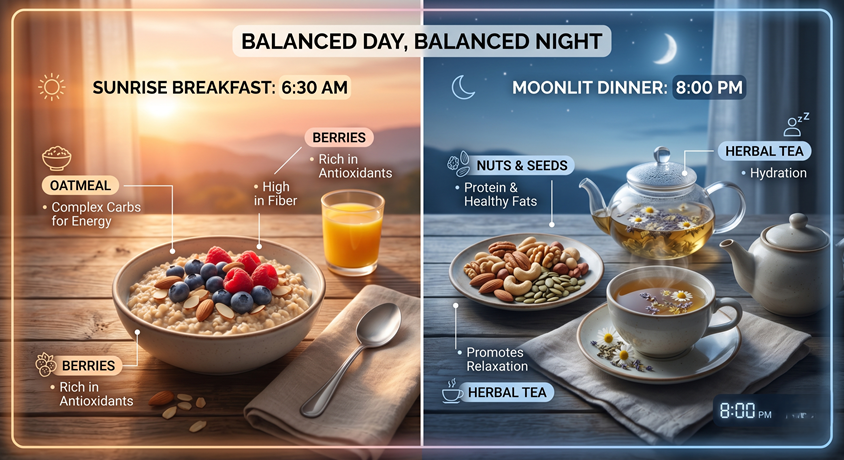

Introduction
In 2026, the nutrition world has moved beyond the simple “calories in vs. calories out” debate. The emerging field of Chrononutrition posits that when you eat is just as vital as what you eat. By aligning our food intake with our internal 24-hour biological clock—the circadian rhythm—we can optimize metabolic function, stabilize energy levels, and significantly improve long-term health outcomes.
The Science of “Biological Prime Time”
Every cell in your body has a “clock gene” that dictates its activity. Your digestive system is no different. Research shows that our bodies are naturally primed for nutrient processing during daylight hours.
- Insulin Sensitivity: Is highest in the morning and early afternoon. As the sun sets, the body begins to prepare for rest, and insulin sensitivity naturally drops.
- Melatonin Interference: Eating late at night conflicts with the release of melatonin. High blood sugar and high melatonin levels are a “metabolic mismatch” that can lead to increased fat storage and disrupted sleep.
The 2026 Approach: Time-Restricted Eating (TRE)
The most popular application of chrononutrition in 2026 is Time-Restricted Eating. Unlike traditional dieting, TRE focuses on a consistent daily eating window, typically aligned with the sun.
| Phase | Recommended Action | Metabolic Benefit |
| Morning (The Engine) | Consume a protein-rich, high-fiber breakfast within 2 hours of waking. | Sets the metabolic pace and stabilizes blood sugar for the day. |
| Mid-Day (Peak Fuel) | The largest meal of the day should occur between 12:00 PM and 2:00 PM. | Digestive enzymes and bile production are at their peak efficiency. |
| Evening (The Wind-down) | A light, early dinner. Ideally, stop eating at least 3–4 hours before bed. | Allows the liver to shift from “processing” to “detoxification” mode. |
Hormonal Balance and Food Choices
Chrononutrition isn’t just about timing; it’s about choosing foods that support the hormonal shifts of the day.
- Cortisol & Breakfast: Morning meals should focus on complex carbohydrates and healthy fats to manage the natural morning cortisol spike.
- Tryptophan & Dinner: Evening meals featuring magnesium-rich greens or tryptophan-heavy proteins (like turkey or seeds) help the body transition into melatonin production.
Chrononutrition for the Modern Lifestyle
For the 2026 professional, sticking to a “sunlight diet” can be challenging due to shift work or global schedules. Modern solutions include:
- Smart CGM Integration: Continuous Glucose Monitors now provide “Chronotype Alerts,” suggesting the optimal time for your next meal based on your unique glucose curves.
- Circadian-Syncing Apps: These tools use your location’s sunrise/sunset data to calculate your ideal 10-hour eating window.
Key Takeaway: If you want to improve your metabolic health, try “Front-Loading” your calories. Shifting 70% of your daily intake to before 3:00 PM has been shown to improve weight loss and cardiovascular markers, even without changing the total number of calories consumed.
Are you interested in a deep dive into how chrononutrition affects athletic performance, or would you like a sample 3-day “Circadian Sync” meal plan?