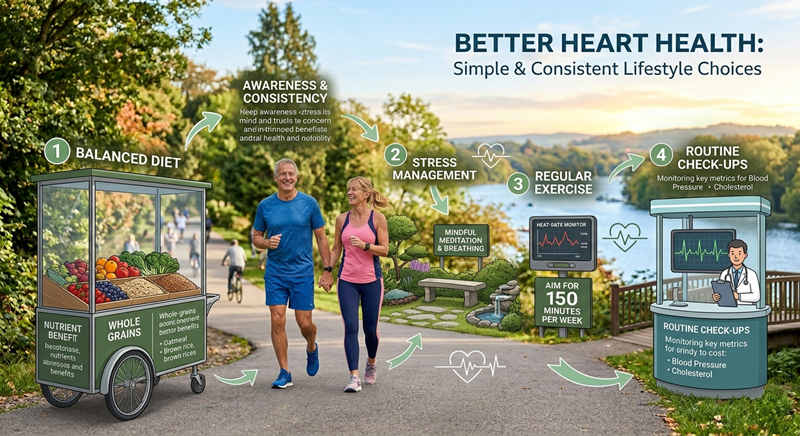

Heart health is central to overall well-being. The heart works tirelessly—beating over 100,000 times a day—to supply oxygen and nutrients to every part of the body. Yet, cardiovascular diseases remain one of the leading causes of death globally. The good news is that many heart-related conditions are preventable through simple lifestyle changes, awareness, and consistency.
This article explores practical, science-backed strategies to improve heart health and reduce the risk of heart disease.
Understanding Heart Health
Heart health refers to the proper functioning of the cardiovascular system, which includes the heart, blood vessels, and blood. When your heart is healthy, it efficiently pumps blood, maintains normal blood pressure, and supports overall body functions.
Poor heart health can lead to conditions such as:
- Coronary artery disease
- Heart attack
- Stroke
- High blood pressure
- Heart failure
Lifestyle factors like poor diet, lack of exercise, smoking, and stress significantly contribute to these conditions.
Why Heart Health Matters
Heart disease accounts for a significant portion of global deaths. Research shows that diet alone plays a major role in preventing cardiovascular disease-related deaths.
Maintaining heart health not only increases lifespan but also improves quality of life, energy levels, and mental well-being.
Key Factors That Affect Heart Health
1. Diet and Nutrition
What you eat directly impacts your heart. Diets high in sugar, salt, and unhealthy fats increase the risk of heart disease, while nutrient-rich foods help protect it.
2. Physical Activity
A sedentary lifestyle weakens the heart over time. Regular movement strengthens the heart muscle and improves circulation.
3. Stress Levels
Chronic stress contributes to high blood pressure and inflammation, both harmful to the heart.
4. Sleep Quality
Lack of sleep disrupts metabolism and increases cardiovascular risk.
5. Medical Conditions
Conditions such as diabetes, high cholesterol, and hypertension significantly increase the risk of heart disease.
15 Effective Ways to Improve Heart Health
1. Stay Physically Active
Regular exercise is one of the best things you can do for your heart. Aim for at least 30 minutes of moderate exercise five days a week.
Activities like walking, cycling, swimming, and yoga improve circulation and strengthen the heart.
2. Eat a Heart-Healthy Diet
Focus on:
- Fruits and vegetables
- Whole grains
- Lean proteins
- Healthy fats (olive oil, nuts, fish)
The Mediterranean diet is often recommended for improving heart health.
3. Reduce Salt Intake
High sodium intake increases blood pressure. Limiting salt helps reduce strain on the heart.
4. Avoid Processed Foods
Ultra-processed foods contain harmful fats, sugars, and additives that increase cardiovascular risk.
5. Maintain a Healthy Weight
Excess weight puts additional pressure on the heart and increases the risk of hypertension and diabetes. Even small weight loss can improve heart health.
6. Quit Smoking
Smoking damages blood vessels, reduces oxygen levels, and significantly increases heart disease risk. Quitting leads to immediate and long-term benefits.
7. Limit Alcohol Consumption
Excessive alcohol intake raises blood pressure and contributes to heart problems. Moderation is key.
8. Manage Stress Effectively
Stress is a silent contributor to heart disease. Practices like meditation, deep breathing, and mindfulness can help reduce stress levels.
9. Get Quality Sleep
Adults should aim for 7–9 hours of sleep per night. Even small improvements in sleep can positively impact heart health.
10. Monitor Blood Pressure
High blood pressure often has no symptoms but significantly increases the risk of heart attack and stroke. Regular check-ups are essential.
11. Control Blood Sugar Levels
Elevated blood sugar can lead to diabetes, a major risk factor for heart disease. Early detection and lifestyle changes can help manage it.
12. Increase Fiber Intake
Fiber helps lower cholesterol and supports healthy digestion. Include foods like oats, beans, fruits, and vegetables.
13. Choose Healthy Fats
Replace saturated fats with unsaturated fats found in:
- Avocados
- Nuts
- Fish
- Olive oil
These fats help reduce inflammation and improve cholesterol levels.
14. Stay Hydrated
Drinking enough water helps maintain proper blood circulation and heart function.
15. Get Regular Health Checkups
Routine medical visits help detect early signs of heart disease and manage risk factors effectively.
Small Changes Make a Big Difference
Recent research highlights that even small improvements—like adding a few minutes of exercise, eating more vegetables, or sleeping slightly longer—can significantly reduce the risk of heart disease.
This shows that heart health doesn’t require drastic changes—consistency matters more than intensity.
Daily Habits for Better Heart Health
Incorporating simple habits into your daily routine can have a lasting impact:
- Start your day with light exercise
- Eat a nutritious breakfast rich in fiber
- Stay active throughout the day
- Practice deep breathing
- Limit screen time and stress
Morning routines, in particular, can set the tone for a heart-healthy day.
Foods That Boost Heart Health
Heart-Friendly Foods
- Leafy greens (spinach, kale)
- Berries
- Nuts and seeds
- Fatty fish (salmon, mackerel)
- Whole grains
- Legumes
Foods to Avoid
- Fried foods
- Sugary drinks
- Processed snacks
- Red and processed meats
- High-sodium foods
The Role of Mental Health
Mental and emotional well-being are closely linked to heart health. Chronic stress, anxiety, and negative emotions can increase inflammation and blood pressure.
Practicing gratitude, staying socially connected, and engaging in hobbies can improve both mental and cardiovascular health.
Common Myths About Heart Health
Myth 1: Only older adults get heart disease
Reality: Young adults are increasingly at risk due to lifestyle factors.
Myth 2: Exercise alone is enough
Reality: Diet, sleep, and stress management are equally important.
Myth 3: Heart disease symptoms are always obvious
Reality: Many conditions develop silently without noticeable symptoms.
Building a Sustainable Heart-Healthy Lifestyle
The key to better heart health is sustainability. Instead of drastic changes, focus on gradual improvements:
- Replace unhealthy snacks with fruits
- Walk instead of using vehicles for short distances
- Cook meals at home
- Stay consistent with exercise
- Track your progress
These small steps can lead to long-term success.
When to See a Doctor
Consult a healthcare professional if you experience:
- Chest pain or discomfort
- Shortness of breath
- Irregular heartbeat
- Dizziness or fatigue
Early diagnosis can prevent serious complications.
Conclusion
Better heart health is achievable through simple, consistent lifestyle choices. A balanced diet, regular exercise, stress management, and routine medical check-ups form the foundation of a healthy heart.
Remember, your heart works nonstop for you—taking care of it should be a top priority. Even small changes today can lead to a longer, healthier, and more fulfilling life.