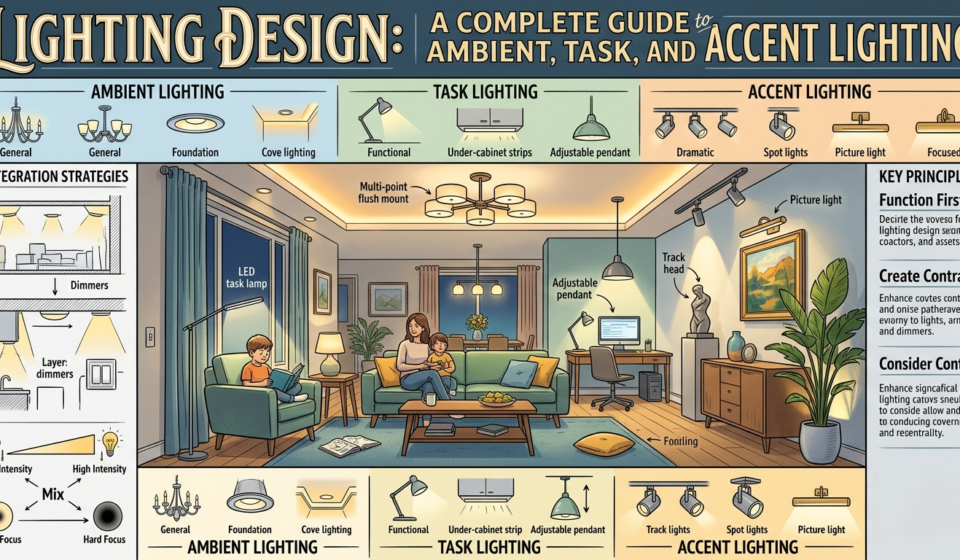

Lighting design is one of the most important yet often overlooked elements of interior design. It has the power to transform a dull room into a warm and inviting space, improve functionality, and even influence mood and productivity. Whether you are designing a modern apartment, renovating a traditional home, or updating a workspace, understanding the fundamentals of lighting design is essential.
A well-designed lighting plan combines three main types of lighting: ambient lighting, task lighting, and accent lighting. Each serves a unique purpose, and together they create a balanced, comfortable, and visually appealing environment. Modern home improvement trends increasingly emphasize layered lighting because homeowners now understand that a single overhead fixture is rarely enough to meet all functional and aesthetic needs.
Understanding Lighting Design
Lighting design is the strategic use of light fixtures, placement, brightness, and color temperature to enhance a space. Good lighting does more than illuminate a room. It shapes the atmosphere, highlights architectural features, improves comfort, and supports daily activities.
Interior designers often refer to lighting as the “fourth dimension” of design because it affects how colors, textures, and furniture appear. Poor lighting can make even an expensive interior look unattractive, while proper lighting can elevate simple décor and create a luxurious feel.
The key to effective lighting design is layering. Layered lighting combines ambient, task, and accent lighting to provide flexibility and depth. Instead of relying on one source of light, different layers work together to create functionality and visual harmony.
1. Ambient Lighting
Ambient lighting, also known as general lighting, is the primary source of illumination in a room. It provides overall brightness and ensures people can move around safely and comfortably.
Purpose of Ambient Lighting
The main goal of ambient lighting is to evenly distribute light throughout a space. It establishes the room’s overall mood and creates a comfortable level of visibility.
Without proper ambient lighting, rooms can feel dark, cramped, or unwelcoming. This layer acts as the foundation upon which task and accent lighting are added.
Common Types of Ambient Lighting
Ceiling-Mounted Fixtures
These are among the most common ambient lighting sources in homes. Examples include flush mounts, semi-flush mounts, and chandeliers.
Recessed Lighting
Recessed lights are installed into the ceiling and provide clean, modern illumination without taking up visual space.
Pendant Lights
Pendant lights can serve as ambient lighting when used in groups or with high-lumen bulbs.
Natural Light
Windows, skylights, and glass doors also contribute to ambient lighting during the daytime. Maximizing natural light is an important part of sustainable home design.
Choosing the Right Ambient Lighting
Consider Room Size
Large rooms require multiple light sources or higher-output fixtures. Smaller rooms may only need one central fixture.
Select Proper Color Temperature
Color temperature greatly affects atmosphere:
- Warm white (2700K–3000K): Cozy and relaxing
- Neutral white (3500K–4100K): Balanced and practical
- Cool white (5000K+): Bright and energizing
Warm lighting is ideal for living rooms and bedrooms, while cooler tones work better in kitchens and offices.
Use Dimmers
Dimmer switches allow flexibility and help create different moods throughout the day.
Best Ambient Lighting Ideas by Room
Living Room
Layer recessed lighting with a decorative chandelier or ceiling fixture.
Bedroom
Soft warm lighting promotes relaxation and better sleep.
Kitchen
Bright overhead lighting ensures visibility and safety.
Bathroom
Even illumination reduces shadows and improves grooming tasks.
2. Task Lighting
Task lighting focuses on specific areas where activities requiring concentration are performed. Unlike ambient lighting, task lighting is directional and more intense.
Importance of Task Lighting
Task lighting reduces eye strain and improves efficiency. Activities such as reading, cooking, studying, shaving, or sewing require focused illumination.
Without proper task lighting, people often experience fatigue and discomfort due to insufficient visibility.
Common Examples of Task Lighting
Desk Lamps
Ideal for reading, writing, and computer work.
Under-Cabinet Kitchen Lighting
Installed beneath cabinets to illuminate countertops.
Vanity Lighting
Bathroom mirrors need dedicated lighting for grooming tasks.
Bedside Lamps
Useful for nighttime reading without disturbing others.
Floor Lamps
Adjustable floor lamps are excellent for living rooms and study areas.
Tips for Effective Task Lighting
Avoid Glare
Position fixtures carefully to prevent reflections and harsh brightness.
Ensure Adequate Brightness
Task areas should be brighter than surrounding spaces.
Choose Adjustable Fixtures
Flexible lighting allows users to direct light precisely where needed.
Match the Activity
Different tasks require different light intensities. Reading needs softer focused light, while cooking requires brighter illumination.
Task Lighting in Different Spaces
Kitchen
Under-cabinet LEDs are highly effective for food preparation.
Home Office
A quality desk lamp improves productivity and reduces eye strain.
Bathroom
Vertical vanity lights on both sides of mirrors provide balanced illumination.
Workshop
Bright focused lighting ensures precision and safety.
Modern homeowners increasingly prioritize functional home office setups and ergonomic lighting as remote work becomes more common.
3. Accent Lighting
Accent lighting is used to highlight specific features, objects, or architectural details. It adds drama, depth, and visual interest to a room.
Purpose of Accent Lighting
Accent lighting draws attention to focal points such as:
- Artwork
- Sculptures
- Textured walls
- Plants
- Bookshelves
- Architectural details
It creates dimension and enhances the overall atmosphere of the space.
Popular Types of Accent Lighting
Track Lighting
Adjustable fixtures direct light toward artwork or decorative objects.
Wall Sconces
Wall-mounted fixtures add elegance and visual layering.
Picture Lights
Designed specifically to illuminate paintings and framed art.
LED Strip Lighting
Commonly used beneath shelves, cabinets, or staircases.
Spotlights
Focused beams emphasize architectural features.
Accent Lighting Techniques
Highlight Texture
Lighting can emphasize materials like brick, wood, or stone.
Create Contrast
Contrast between bright and shadowed areas adds sophistication.
Use the 3:1 Rule
Accent lighting should typically be three times brighter than surrounding ambient light for effective emphasis.
Best Places for Accent Lighting
Living Rooms
Highlight artwork, fireplaces, or display shelves.
Hallways
Wall sconces add elegance and improve navigation.
Outdoor Spaces
Landscape lighting enhances curb appeal and safety.
Bedrooms
LED strips behind headboards create a luxurious atmosphere.
The Importance of Layered Lighting
Professional lighting designers rarely rely on a single light source. Instead, they combine ambient, task, and accent lighting to achieve balance and flexibility.
Benefits of Layered Lighting
Improved Functionality
Different lighting layers support various activities throughout the day.
Enhanced Aesthetics
Layered lighting adds depth and sophistication.
Better Mood Control
Adjustable lighting allows homeowners to create different atmospheres.
Increased Property Appeal
Well-lit interiors appear more modern and valuable.
Layered lighting has become a major trend in contemporary home improvement and interior design projects.
Smart Lighting and Modern Trends
Technology has transformed lighting design in recent years. Smart lighting systems allow homeowners to control brightness, color, and schedules through smartphones or voice assistants.
Features of Smart Lighting
- Remote control
- Motion sensors
- Voice activation
- Energy monitoring
- Color-changing options
Benefits of Smart Lighting
Energy Efficiency
LED smart bulbs consume significantly less electricity.
Convenience
Users can automate lighting schedules.
Enhanced Security
Lights can simulate occupancy while homeowners are away.
Personalization
Lighting scenes can match activities or moods.
Smart homes and sustainable living trends continue influencing lighting innovation across modern interiors.
Energy Efficiency in Lighting Design
Energy-efficient lighting is essential for reducing utility costs and environmental impact.
LED Lighting
LEDs are currently the most popular lighting option because they:
- Consume less power
- Last longer
- Produce less heat
- Require minimal maintenance
Daylighting Strategies
Using natural light effectively can significantly reduce electricity usage.
Tips for Maximizing Natural Light
- Install larger windows
- Use mirrors to reflect light
- Choose light-colored walls
- Keep window treatments minimal
Eco-friendly home improvement practices increasingly emphasize efficient lighting systems and sustainable materials.
Common Lighting Design Mistakes
Overusing Overhead Lighting
One ceiling fixture alone often creates flat and unattractive illumination.
Ignoring Dimmers
Without dimmers, lighting lacks flexibility.
Using the Wrong Color Temperature
Cool white lighting in bedrooms can feel harsh and uncomfortable.
Poor Fixture Placement
Improper placement creates shadows and glare.
Neglecting Accent Lighting
Rooms without visual highlights may appear dull and uninspiring.
Tips for Creating the Perfect Lighting Plan
Start with Function
Identify how each room will be used.
Layer the Lighting
Combine ambient, task, and accent lighting strategically.
Focus on Balance
Avoid areas that are too bright or too dark.
Choose Quality Fixtures
Well-designed fixtures improve both appearance and performance.
Consider Future Flexibility
Smart lighting and dimmers provide adaptability as needs change.
Conclusion
Lighting design is far more than simply installing bulbs and fixtures. It is a crucial aspect of interior design that affects comfort, functionality, aesthetics, and emotional well-being. By understanding the roles of ambient, task, and accent lighting, homeowners can create spaces that are both beautiful and practical.
Ambient lighting establishes the foundation of illumination, task lighting supports daily activities, and accent lighting adds personality and visual interest. Together, these layers create a balanced and inviting environment.
Modern trends in home improvement increasingly emphasize layered lighting, energy efficiency, and smart technology, making lighting design one of the most impactful upgrades for any home. Whether you are renovating a single room or designing an entire house, thoughtful lighting choices can dramatically transform the way a space looks and feels.