
The way we live has transformed dramatically over the past two and a half decades. The year 2000 marked the beginning of a new millennium filled with optimism, simplicity, and slower living. Fast forward to 2026, and life is shaped by technology, evolving values, and a deep desire for balance and meaning.
This transformation is not just about gadgets or fashion—it reflects a fundamental shift in how people think, work, connect, and define happiness. Let’s explore how lifestyle has changed from 2000 to 2026 and what it means for modern living.
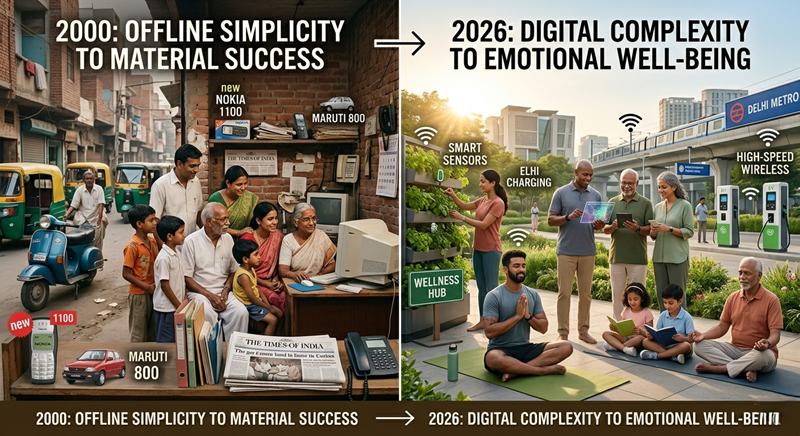
🕰️ Life in the Year 2000: Simpler, Slower, and More Offline
In the early 2000s, life moved at a slower pace. Technology existed, but it did not dominate daily routines.
📞 Limited Technology, More Human Interaction
- Mobile phones were basic—used mainly for calls and texts
- Internet access was slow and limited to desktops
- Social media was almost non-existent
- People met friends physically instead of virtually
Daily life was more predictable and less distracted. Communication required effort, which made relationships feel more intentional.
🏠 Clear Boundaries Between Work and Home
Work-life balance in 2000 was easier to maintain:
- Offices were the primary workplace
- After work hours were mostly free
- No constant notifications or emails
Unlike today, work rarely followed people home.
👗 Fashion and Lifestyle Trends
Fashion in the 2000s was bold and expressive:
- Baggy jeans, tracksuits, and oversized clothing
- Influence of pop culture and music
- Rise of fast-changing trends
Lifestyle choices were often influenced by celebrities and television rather than digital influencers.
🍔 Food and Health Habits
- Processed food consumption was higher
- Fitness was less integrated into daily routines
- Awareness about mental health was limited
Health was important, but not as deeply connected to everyday lifestyle decisions as it is today.
🚀 Lifestyle in 2026: Fast, Digital, and Purpose-Driven
Life in 2026 is dramatically different. It is faster, smarter, and more connected—but also more intentional.
📱 Digital Integration in Everyday Life
Technology is now deeply embedded in daily routines:
- Smartphones manage communication, work, shopping, and health
- AI tools assist with decision-making and planning
- Online platforms dominate entertainment and learning
Digital convenience has made life easier—but also more complex.
People now expect seamless digital experiences in everything from banking to healthcare .
🧠 Mental Health and Wellness Take Center Stage
One of the biggest changes is the focus on well-being.
In 2026:
- Mental health is a daily priority
- Mindfulness, meditation, and therapy are normalized
- People design routines around emotional balance
Wellness is no longer optional—it’s a core part of lifestyle decisions .
There’s even a growing concept of “brain wealth,” where people actively invest in cognitive health and performance .
🏡 Homes Become Multifunctional Spaces
In 2000, homes were mainly for living. In 2026, they serve multiple purposes:
- Workspace
- Gym
- Relaxation zone
- Entertainment hub
Flexible living spaces and hybrid lifestyles are now the norm .
🌱 Sustainability and Conscious Living
Environmental awareness has grown significantly:
- Eco-friendly products are preferred
- People reduce waste and consumption
- Sustainable fashion and food choices are rising
Sustainability is no longer a trend—it’s a lifestyle standard .
⏳ From Hustle Culture to Slow Living
The early 2020s emphasized productivity and hustle. By 2026, the mindset has shifted.
- People value rest and balance
- Slow mornings and mindful routines are popular
- Life is less about doing more and more about doing what matters
Living well now means living intentionally, not just efficiently .
💼 Work Culture Transformation
Work has undergone a massive shift:
- Remote and hybrid work models are common
- Flexible schedules replace strict 9-to-5 jobs
- People prioritize freedom over job titles
Lifestyle is now designed around life—not just career.
💖 Changing Definitions of Success
In 2000, success was defined by:
- High-paying jobs
- Material possessions
- Social status
In 2026, success means:
- Happiness and fulfillment
- Work-life balance
- Mental peace
People are moving away from traditional status symbols toward meaningful experiences .
🔍 Key Differences: 2000 vs 2026
1. Technology
- 2000: Limited, slow, optional
- 2026: Advanced, fast, essential
2. Communication
- 2000: Face-to-face and phone calls
- 2026: Social media, messaging apps, virtual connections
3. Work-Life Balance
- 2000: Clear boundaries
- 2026: Flexible but blended
4. Health Awareness
- 2000: Physical health focus
- 2026: Holistic wellness (mental + physical)
5. Lifestyle Values
- 2000: Convenience and consumption
- 2026: Purpose, sustainability, and balance
6. Daily Routine
- 2000: Structured and predictable
- 2026: Flexible and personalized
🌐 The Role of Technology in Lifestyle Transformation
Technology is the biggest driver of change.
In 2026:
- AI helps plan meals, workouts, and schedules
- Smart devices automate homes
- Digital platforms replace traditional services
For example, AI-powered nutrition tools can personalize diets based on individual health data .
However, this digital dependence has also created a need for balance. People are now actively reducing screen time and reconnecting with offline activities
However, this digital dependence has also created a need for balance. People are now actively reducing screen time and reconnecting with offline activities .
🧑🤝🧑 Social Life: Then vs Now
In 2000:
- Social gatherings were frequent
- Friendships were built through physical interaction
- Communities were local
In 2026:
- Social media connects people globally
- Online communities are common
- Real-life interactions are more intentional
Interestingly, while technology has increased connectivity, it has also led to concerns about loneliness, making meaningful relationships more important than ever .
🍽️ Food and Lifestyle Habits
2000:
- Fast food culture rising
- Less awareness about ingredients
- Cooking was traditional
2026:
- Clean eating and minimal ingredients
- AI-assisted meal planning
- Focus on nutrition and health
People now prefer simple, transparent, and functional foods over heavily processed options .
👗 Fashion and Personal Expression
Fashion reflects lifestyle changes.
2000:
- Trend-driven and bold
- Influenced by celebrities
2026:
- Sustainable and personalized
- Mix of past trends (Y2K revival) and modern design
- Focus on comfort and identity
Fashion is now a form of self-expression rather than just trend-following.
🧘 The Rise of Intentional Living
Perhaps the biggest change is the shift toward intentional living.
In 2026, people ask:
- Does this add value to my life?
- Does this support my well-being?
- Is this aligned with my values?
Lifestyle decisions are no longer automatic—they are thoughtful and purpose-driven.
⚖️ Challenges of Modern Lifestyle
Despite advancements, modern life has its challenges:
- Digital overload
- Work-life imbalance
- Mental health pressures
- Information fatigue
This is why balance has become the ultimate goal.
🌟 What We Can Learn from the Past
While 2026 offers convenience and innovation, the simplicity of 2000 still holds valuable lessons:
- Spend more time offline
- Build real connections
- Slow down and enjoy life
- Focus on what truly matters
Combining the best of both eras can create a healthier and more fulfilling lifestyle.
🚀 Conclusion: A New Definition of Living Well
The journey from 2000 to 2026 shows how much human life can evolve in a short time. From offline simplicity to digital complexity, from material success to emotional well-being, lifestyle has undergone a complete transformation.
Today, living well is no longer about having more—it’s about living better.
The future of lifestyle is not just about innovation, but about intention, balance, and meaning