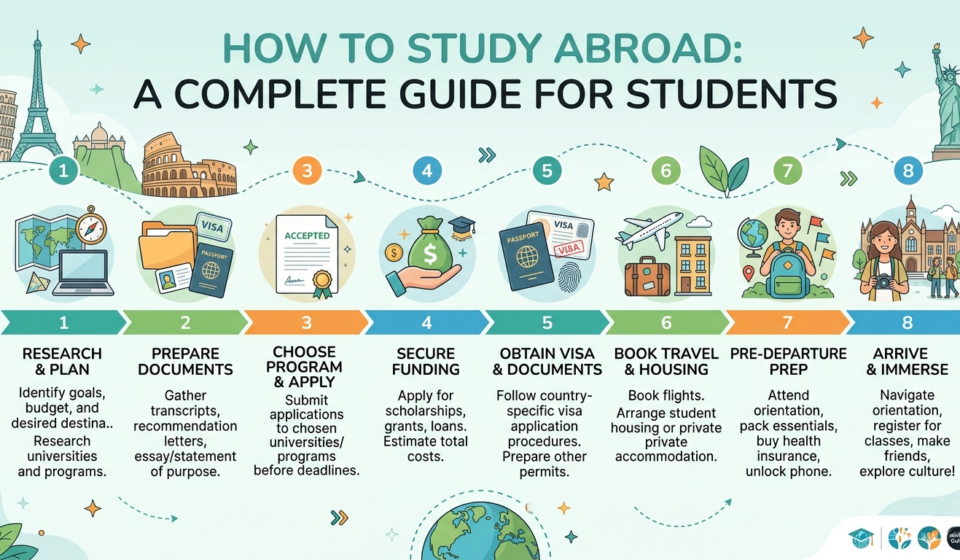

Studying abroad is a dream for millions of students around the world. It offers the chance to receive a world-class education, experience new cultures, improve career opportunities, and develop personal independence. Whether you want to study in the United States, Canada, the United Kingdom, Australia, Germany, or another country, planning properly is essential for success.
This guide explains everything you need to know about studying abroad, including choosing a country, selecting a university, applying for admission, arranging finances, getting a visa, and adapting to life overseas.
Why Study Abroad?
Studying abroad provides several academic, professional, and personal benefits. International education helps students gain global exposure and access advanced learning opportunities. Many universities abroad offer research-based education, practical learning methods, and internationally recognized degrees.
Students who study abroad also improve their communication skills, build confidence, and experience multicultural environments. Employers often value international graduates because they demonstrate adaptability, independence, and cross-cultural understanding.
Another major advantage is access to better career opportunities. Many countries allow international students to work part-time during studies and even stay after graduation for work experience.
Choosing the Right Country
Selecting the right country is one of the most important decisions in the study abroad journey. Every country offers different education systems, tuition fees, work opportunities, and lifestyles.
United States
The United States is known for top-ranked universities, flexible courses, and excellent research opportunities. It is ideal for students interested in technology, business, medicine, and engineering.
Canada
Canada is popular for affordable education, friendly immigration policies, and high-quality universities. Students also benefit from post-graduation work permits.
United Kingdom
The UK offers shorter degree programs and prestigious universities. Students can complete undergraduate degrees in three years and many master’s programs in one year.
Australia
Australia provides quality education and strong support for international students. It is well known for courses in healthcare, business, and environmental sciences.
Germany
Germany attracts students because many public universities offer low-cost or tuition-free education, especially for engineering and technical courses.
Before choosing a country, students should compare:
- Tuition fees
- Cost of living
- Climate
- Job opportunities
- Language requirements
- Visa policies
- Safety and lifestyle
Choosing the Right Course and University
After selecting a country, the next step is choosing the right course and university. Students should select a program based on their interests, career goals, and academic strengths.
Research universities carefully by checking:
- Global rankings
- Course curriculum
- Faculty expertise
- Internship opportunities
- Research facilities
- Campus environment
- Placement records
Students should also verify accreditation and recognition of the university to ensure the degree has international value.
Popular courses among international students include:
- Computer Science
- Engineering
- Business Administration
- Data Science
- Medicine
- Artificial Intelligence
- Hospitality Management
- Finance
- Psychology
Understanding Eligibility Requirements
Different universities have different admission requirements. However, most institutions ask for:
- Academic transcripts
- English language proficiency test scores
- Statement of Purpose (SOP)
- Letters of Recommendation (LOR)
- Resume or CV
- Passport copy
English Language Tests
Most universities require proof of English proficiency. Common exams include:
- IELTS
- TOEFL
- PTE
- Duolingo English Test
Some universities may waive English tests if previous education was in English.
Standardized Tests
Depending on the course and country, students may also need:
- SAT or ACT for undergraduate programs
- GRE for graduate programs
- GMAT for MBA programs
Students should check university websites for exact requirements.
Preparing Application Documents
A strong application increases the chances of admission. Students should prepare documents carefully and honestly.
Statement of Purpose (SOP)
The SOP explains:
- Academic background
- Career goals
- Reasons for choosing the course
- Why the student selected that university
A good SOP should be clear, professional, and personalized.
Letters of Recommendation (LOR)
Recommendation letters are usually written by teachers, professors, or employers. They should highlight the student’s academic abilities, character, and achievements.
Resume or CV
Students should include:
- Academic qualifications
- Skills
- Internships
- Certifications
- Extracurricular activities
- Volunteer work
Applying to Universities
Most universities accept online applications through their official portals. Students should apply to multiple universities to increase their chances of acceptance.
Applications generally include:
- Filling out the online form
- Uploading required documents
- Paying application fees
- Submitting test scores
After submission, universities review applications and issue:
- Acceptance letters
- Conditional offers
- Rejection notices
Students who receive admission offers must confirm acceptance before deadlines.
Planning Finances
Financial planning is one of the biggest parts of studying abroad. Students should calculate all expected expenses before making decisions.
Major Expenses
- Tuition fees
- Accommodation
- Food
- Transportation
- Health insurance
- Study materials
- Personal expenses
Scholarships
Many universities and governments offer scholarships to international students based on merit, financial need, or special talents.
Popular scholarship programs include:
- Fulbright Scholarships
- Chevening Scholarships
- Erasmus+
- DAAD Scholarships
- Commonwealth Scholarships
Students should apply early because scholarship deadlines often differ from admission deadlines.
Education Loans
Students can also apply for education loans through banks or financial institutions. Loan approval may depend on:
- University reputation
- Course type
- Financial background
- Co-applicant income
Applying for a Student Visa
After receiving admission confirmation, students must apply for a student visa. Visa rules vary by country, but most applications require:
- Valid passport
- Admission letter
- Financial proof
- Visa application form
- Passport-size photos
- Medical reports
- English test scores
Some countries also conduct visa interviews.
Students should prepare honest answers and provide genuine documents to avoid rejection.
Finding Accommodation
International students usually choose between:
- University dormitories
- Shared apartments
- Homestays
- Private rentals
University housing is often safer and easier for first-year students because it provides access to campus facilities and student communities.
Before booking accommodation, students should consider:
- Distance from university
- Safety
- Internet access
- Transportation
- Monthly cost
Preparing for Departure
Before leaving for another country, students should complete several important tasks:
- Book flight tickets
- Arrange foreign currency
- Buy health insurance
- Pack essential documents
- Inform banks about international travel
- Learn local laws and customs
Students should also carry both physical and digital copies of important documents.
Adjusting to Life Abroad
Moving to another country can be exciting but challenging. Students may experience homesickness, culture shock, or language difficulties during the first few months.
Tips for Adjustment
- Make new friends
- Participate in university activities
- Maintain a healthy routine
- Stay connected with family
- Learn local customs
- Improve communication skills
Most universities offer counseling and support services for international students.
Working While Studying
Many countries allow international students to work part-time during studies. This helps students gain experience and manage living expenses.
Common student jobs include:
- Retail assistant
- Library assistant
- Restaurant staff
- Tutor
- Delivery services
- Campus jobs
Students must follow visa rules regarding work hours.
Career Opportunities After Graduation
One major reason students choose international education is better career opportunities. Many countries provide post-study work permits that allow graduates to gain professional experience.
Graduates can:
- Apply for full-time jobs
- Gain international work experience
- Build professional networks
- Improve long-term career prospects
Fields such as technology, healthcare, engineering, finance, and data science currently offer strong international job demand.
Challenges of Studying Abroad
Although studying abroad has many benefits, students may face certain challenges:
- Financial pressure
- Language barriers
- Cultural differences
- Academic stress
- Homesickness
Proper planning and emotional preparation can help students overcome these difficulties successfully