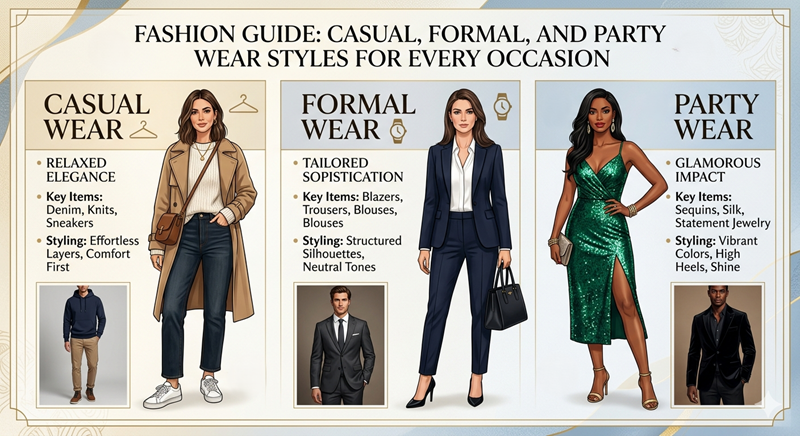

Fashion is more than just clothing—it is a powerful form of self-expression that reflects personality, mood, and lifestyle. From relaxed everyday outfits to polished office looks and glamorous party ensembles, every category of fashion plays a unique role in our lives. Understanding how to style casual, formal, and party wear not only enhances your appearance but also boosts confidence in every setting.
In today’s fast-changing world of fashion, trends evolve quickly, but the foundation of good style remains constant: comfort, appropriateness, and individuality. Let’s explore these three major fashion categories in detail and learn how to master each one effortlessly.
1. Casual Wear: Comfort Meets Style
Casual wear is the most versatile and widely used category in fashion. It represents comfort, simplicity, and ease while still allowing room for creativity and personal flair. Casual outfits are ideal for daily activities such as shopping, traveling, meeting friends, or working from home.
Key Elements of Casual Wear
Casual fashion typically includes items like:
- T-shirts and tops
- Jeans and trousers
- Shorts and skirts
- Hoodies and sweatshirts
- Sneakers and flats
The primary goal is comfort without compromising on style. Modern casual wear blends functionality with aesthetics, making it both practical and trendy.
Styling Tips for Casual Wear
- Focus on Fit: Even the simplest outfit can look stylish if it fits well. Avoid overly baggy or extremely tight clothing.
- Play with Colors: Casual wear allows experimentation with vibrant colors, pastels, and prints.
- Layer Smartly: Add layers like denim jackets, cardigans, or scarves to elevate a basic look.
- Choose Comfortable Fabrics: Cotton, linen, and jersey fabrics are ideal for everyday wear.
Popular Casual Trends
Fashion blogs emphasize the importance of mixing basics with statement pieces. For example, pairing a plain white T-shirt with ripped jeans and sneakers creates a timeless casual look. Athleisure—combining sportswear with casual outfits—has also become a dominant trend, reflecting a shift toward comfort-driven fashion.
2. Formal Wear: Elegance and Professionalism
Formal wear is associated with sophistication, structure, and professionalism. It is typically worn in workplaces, business meetings, interviews, and formal events. Unlike casual wear, formal clothing follows specific guidelines and dress codes.
Key Elements of Formal Wear
For men:
- Suits and blazers
- Dress shirts
- Ties or bow ties
- Formal shoes
For women:
- Tailored dresses
- Blouses and skirts
- Pantsuits
- Heels or formal flats
Formal wear is designed to create a polished and refined appearance. It communicates seriousness, competence, and respect for the occasion.
Styling Tips for Formal Wear
- Stick to Neutral Colors: Black, navy, grey, and white are classic choices for formal attire.
- Pay Attention to Details: Well-ironed clothes, clean shoes, and minimal accessories make a big difference.
- Invest in Quality Pieces: Formal wear is often worn repeatedly, so quality matters more than quantity.
- Maintain Simplicity: Avoid overly flashy designs; elegance lies in simplicity.
Business Casual: A Modern Twist
In recent years, business casual has emerged as a popular alternative to strict formal wear. It blends professionalism with comfort—think blazers paired with chinos or skirts with stylish tops. This style is ideal for workplaces that encourage flexibility while maintaining a professional image.
3. Party Wear: Glamour and Expression
Party wear is all about making a statement. Whether it’s a wedding, cocktail event, birthday celebration, or festive gathering, party outfits are designed to stand out and reflect your personality.
Key Elements of Party Wear
Party wear includes:
- Cocktail dresses
- Evening gowns
- Stylish suits
- Designer outfits
- Statement accessories
Unlike casual or formal wear, party fashion allows bold experimentation with colors, textures, and embellishments.
Styling Tips for Party Wear
- Choose Statement Pieces: Sequins, metallic fabrics, and bold prints can enhance your look.
- Accessorize Smartly: Jewelry, handbags, and shoes can transform your outfit.
- Focus on Balance: If your outfit is heavily embellished, keep accessories minimal.
- Wear Confidence: The most important element of party wear is how confidently you carry it.
Popular Party Trends
The “little black dress” remains a timeless favorite for parties due to its versatility and elegance. Similarly, bold colors like red, gold, and emerald green are popular choices for festive occasions.
Modern party fashion also incorporates fusion styles, blending traditional and western elements—especially in countries like India, where ethnic wear plays a major role in celebrations.
4. Choosing the Right Outfit for the Occasion
One of the most important aspects of fashion is understanding what to wear and when. Wearing the right outfit for the right occasion ensures comfort and appropriateness.
Casual vs Formal vs Party Wear
| Occasion Type | Ideal Outfit | Key Focus |
|---|---|---|
| Casual | Jeans, T-shirts, sneakers | Comfort |
| Formal | Suits, dresses, blazers | Professionalism |
| Party | Gowns, stylish suits, accessories | Glamour |
Each category serves a different purpose, and mastering all three ensures a well-rounded wardrobe.
5. Building a Versatile Wardrobe
A smart wardrobe includes a balanced mix of casual, formal, and party wear. Instead of buying excessive clothing, focus on versatile pieces that can be styled in multiple ways.
Essential Wardrobe Pieces
- White shirt (can be casual or formal)
- Black trousers
- Denim jeans
- Blazer
- Little black dress
- Comfortable sneakers
- Elegant heels
These staples can be mixed and matched to create numerous outfits for different occasions.
Mix and Match Strategy
For example:
- Pair a blazer with jeans for a semi-formal look
- Combine a formal shirt with casual trousers for a smart-casual outfit
- Add statement accessories to a simple dress for a party-ready look
Fashion experts often recommend building a wardrobe of high-quality basics that can be styled in multiple ways.
6. The Role of Accessories
Accessories are an essential part of fashion. They have the power to transform even the simplest outfit into something stylish and unique.
Types of Accessories
- Jewelry (necklaces, earrings, bracelets)
- Watches
- Bags
- Belts
- Scarves
How to Use Accessories Effectively
- Keep it minimal for formal wear
- Experiment with bold pieces for party wear
- Use functional accessories like backpacks or caps for casual looks
Accessories help define your style and add a personal touch to your outfit.
7. Fashion Trends and Personal Style
While trends influence fashion, personal style should always take priority. Trends come and go, but your style is what defines you.
How to Develop Your Personal Style
- Understand Your Preferences: Choose clothes that reflect your personality.
- Experiment: Try different styles to see what suits you best.
- Stay Updated: Follow fashion blogs and trends for inspiration.
- Be Confident: Confidence is the key to pulling off any outfit.
Fashion is a blend of creativity and practicality. It evolves with time, influenced by culture, media, and global trends.
8. Sustainable Fashion: A Growing Trend
In recent years, sustainability has become an important aspect of fashion. People are becoming more conscious of their clothing choices and their impact on the environment.
Tips for Sustainable Fashion
- Buy fewer but higher-quality clothes
- Choose eco-friendly fabrics
- Reuse and recycle outfits
- Support ethical brands
Sustainable fashion promotes mindful consumption and encourages people to focus on quality over quantity.
Conclusion
Casual, formal, and party wear each play a vital role in shaping our overall style. Casual wear offers comfort and flexibility, formal wear ensures professionalism and elegance, and party wear allows self-expression and creativity. By understanding these categories and learning how to style them effectively, you can build a wardrobe that suits every occasion.
Fashion is not about blindly following trends—it is about expressing who you are. Whether you prefer a relaxed casual look, a sharp formal outfit, or a glamorous party ensemble, the key is to wear it with confidence.
With the right balance of style, comfort, and individuality, anyone can master the art of fashion and make a lasting impression wherever they go.