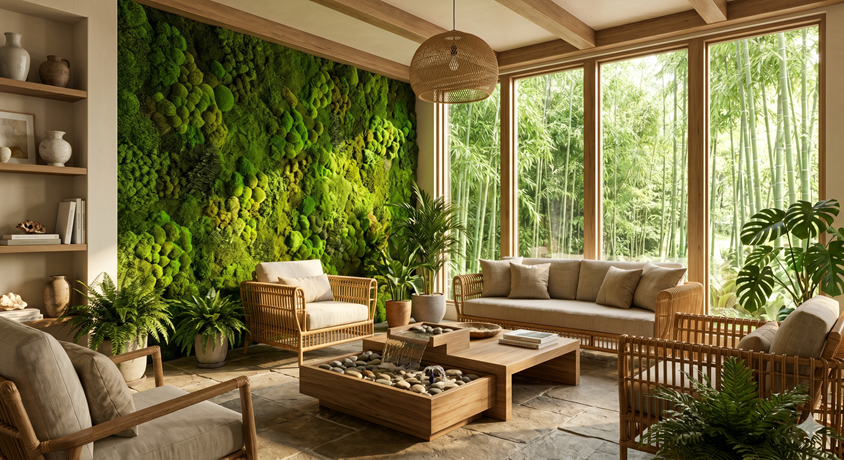

As we navigate 2026, the boundary between our indoor environments and the natural world has blurred. Biophilic design is no longer just a luxury trend for high-end offices; it has become a fundamental pillar of residential wellness. By integrating nature into the “bones” of our homes, we aren’t just decorating—we are improving cognitive function, reducing cortisol levels, and boosting overall physical health.
The Core Patterns of Nature-Inpired Living
Effective biophilic design goes beyond placing a fern in a corner. It involves a multi-sensory approach to architecture and decor:
- Visual Connection with Nature: Utilizing living walls and floor-to-ceiling windows to maintain a constant line of sight to greenery or water features.
- Non-Rhythmic Sensory Stimuli: Incorporating movement—such as the gentle sway of grasses or the ripple of a small indoor fountain—to mimic the soothing unpredictability of the wild.
- Thermal & Airflow Variability: Designing spaces with subtle changes in temperature and airflow, preventing the “stale” feeling of traditional HVAC-controlled rooms.
2026 Innovation: Circadian Lighting Solutions
One of the most significant shifts in home improvement is the adoption of circadian lighting. These smart systems sync with the sun’s natural cycle:
- Morning: Cool, blue-toned light to suppress melatonin and energize the body.
- Evening: Warm, amber hues that prepare the brain for restorative sleep.
- Benefit: This alignment regulates the body’s internal clock, significantly improving sleep quality and daytime productivity.
Organic Textures and Sustainable Materials
In 2026, homeowners are swapping synthetic finishes for organic textures. The goal is “haptic variety”—materials that feel different to the touch.
| Material | Biophilic Benefit | Eco-Impact |
| Reclaimed Wood | Provides visual warmth and “grain” patterns. | Carbon sequestering; reduces waste. |
| Cork & Bamboo | Soft, acoustic-dampening, and tactile. | Highly renewable and biodegradable. |
| Stone & Clay | Connects the interior to the local geology. | Low VOC emissions; high durability. |
The “Living Wall” Revolution
The “living wall” has evolved from a complex maintenance nightmare into a plug-and-play reality for the average kitchen or living room. Modern systems use hydroponic felt layers and automated nutrient delivery, allowing even those without a “green thumb” to maintain a lush vertical garden. These installations act as natural air purifiers, stripping toxins like benzene and formaldehyde from the indoor atmosphere.
Design Tip: Start small with “Nature in the Space.” If a full renovation isn’t feasible, focus on fractal patterns. Rugs or wallpapers that mimic the repeating geometry found in leaves or snowflakes can provide the same psychological “reset” as actual nature.
Would you like to explore the specific psychological benefits of various plant species, or are you interested in a technical guide for installing smart circadian lighting?