Hosting, Servers, and Cloud Platforms: The Foundation of Modern Digital Infrastructure

In today’s digital era, every website, mobile app, streaming service, and online business depends on a powerful technological backbone. That backbone is built on hosting services, servers, and cloud platforms. Whether you are running a personal blog, an eCommerce website, a startup application, or an enterprise-level system, understanding these technologies is essential for achieving performance, security, scalability, and reliability.
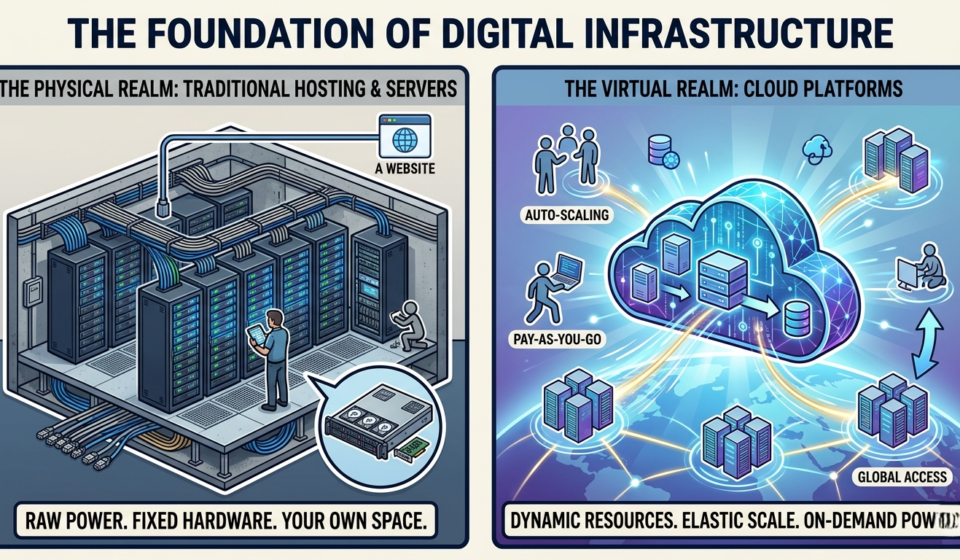
The rapid growth of online businesses and digital transformation has increased the demand for robust hosting environments and cloud-based infrastructure. Modern organizations no longer rely solely on traditional physical servers. Instead, they are moving toward flexible cloud ecosystems that offer better scalability, lower operational costs, and improved global accessibility.
Understanding Web Hosting
Web hosting is a service that allows individuals and organizations to publish websites and applications on the internet. Hosting providers allocate storage space, bandwidth, and server resources to ensure websites remain accessible to users around the world.
Whenever someone types a website address into a browser, the browser communicates with a hosting server to retrieve website files and display them on the user’s screen. Without hosting, websites cannot exist online.
There are several major types of web hosting available today:
Shared Hosting
Shared hosting is the most affordable hosting solution. Multiple websites share the same server resources, including CPU, RAM, and storage. It is ideal for beginners, bloggers, and small businesses with moderate traffic.
Advantages include:
- Low cost
- Easy setup
- Beginner-friendly management
However, shared hosting also has limitations:
- Slower performance during traffic spikes
- Limited customization
- Reduced security compared to isolated environments
VPS Hosting
Virtual Private Server (VPS) hosting divides a physical server into multiple virtual environments. Each user receives dedicated resources, making VPS hosting more powerful and reliable than shared hosting.
Benefits include:
- Better performance
- Greater flexibility
- Root access for customization
- Improved security
VPS hosting is commonly used by growing businesses and developers who need more control over server configurations.
Dedicated Hosting
Dedicated hosting provides an entire physical server to a single customer. This hosting type delivers maximum performance, advanced security, and complete control.
It is ideal for:
- High-traffic websites
- Large enterprises
- Gaming servers
- Financial applications
The downside is higher cost and the need for technical expertise to manage server operations.
Managed Hosting
Managed hosting services simplify server administration by handling updates, backups, security patches, and monitoring. Businesses can focus on operations while the provider manages technical infrastructure.
Managed hosting has become increasingly popular because many organizations prefer convenience and reliability over manual server management.
What Are Servers?
Servers are powerful computers designed to process requests, store data, and deliver services across networks. Unlike personal computers, servers are optimized for continuous operation, high reliability, and heavy workloads.
A server can host websites, manage databases, process emails, run applications, or support cloud services.
Types of Servers
Web Servers
Web servers deliver website content to users through browsers. Popular web server software includes Apache, Nginx, and Microsoft IIS.
These servers handle:
- Website files
- HTTP requests
- Content delivery
- SSL encryption
Database Servers
Database servers store and manage structured data for applications and websites. Common database technologies include MySQL, PostgreSQL, and MongoDB.
Businesses use database servers for:
- Customer records
- Financial data
- Product inventories
- Analytics
File Servers
File servers provide centralized storage and file sharing within organizations. Employees can access shared documents, media, and resources from multiple devices.
Application Servers
Application servers run software applications and process business logic. They connect frontend interfaces with backend databases and services.
Examples include:
- Java application servers
- Node.js environments
- Python frameworks
- Enterprise software platforms
The Rise of Cloud Platforms
Cloud computing has transformed the technology industry by replacing traditional on-premise infrastructure with internet-based computing resources. Instead of buying expensive hardware, businesses can rent servers, storage, databases, and networking services on demand.
Cloud platforms offer flexibility, scalability, and cost-efficiency that traditional systems cannot easily match.
What Is Cloud Computing?
Cloud computing is the delivery of computing services through the internet. These services include:
- Virtual servers
- Data storage
- Networking
- Artificial intelligence tools
- Software applications
- Databases
- Security systems
Users pay only for the resources they consume, making cloud computing highly economical.
Types of Cloud Deployment Models
Public Cloud
Public cloud services are provided by third-party companies and shared among multiple customers. Examples include major global cloud providers offering scalable infrastructure and managed services.
Advantages:
- Lower cost
- High scalability
- Easy deployment
Private Cloud
Private clouds are dedicated to a single organization. They offer enhanced security and customization for businesses with strict compliance requirements.
Private cloud environments are often used by:
- Government agencies
- Financial institutions
- Healthcare organizations
Hybrid Cloud
Hybrid cloud combines public and private cloud environments. Businesses can store sensitive data privately while using public cloud resources for scalability and performance.
This model provides flexibility and operational efficiency.
Benefits of Cloud Platforms
Cloud platforms have become the preferred infrastructure choice for startups and enterprises alike because of their numerous advantages.
Scalability
Cloud systems allow businesses to scale resources up or down instantly based on demand. During traffic spikes, companies can add server capacity without purchasing new hardware.
Cost Efficiency
Traditional infrastructure requires large upfront investments in hardware and maintenance. Cloud computing eliminates these costs by offering subscription-based pricing.
Reliability
Cloud providers operate global data centers with redundancy and backup systems. This ensures high uptime and disaster recovery capabilities.
Global Accessibility
Cloud platforms allow users and teams to access applications and data from anywhere in the world using internet connectivity.
Enhanced Security
Modern cloud providers invest heavily in cybersecurity technologies, including:
- Encryption
- Firewalls
- Threat monitoring
- Access management
- Backup systems
Security has become a major focus in modern cloud architecture and DevOps practices.
Popular Cloud Service Models
Cloud computing is generally divided into three primary service models.
Infrastructure as a Service (IaaS)
IaaS provides virtualized computing resources such as servers, networking, and storage.
Users manage:
- Operating systems
- Applications
- Security configurations
Providers manage:
- Physical hardware
- Virtualization
- Networking infrastructure
Platform as a Service (PaaS)
PaaS provides development environments where developers can build, test, and deploy applications without managing infrastructure.
Benefits include:
- Faster development
- Reduced complexity
- Integrated tools
Software as a Service (SaaS)
SaaS delivers software applications directly through web browsers.
Examples include:
- Email platforms
- Project management tools
- Video conferencing software
- Customer relationship management systems
SaaS applications are highly convenient because users do not need to install or maintain software locally.
The Role of Virtualization
Virtualization is one of the core technologies behind cloud computing and modern hosting environments. It allows multiple virtual machines to run on a single physical server.
Benefits include:
- Better resource utilization
- Lower hardware costs
- Improved scalability
- Faster deployment
Virtualization technologies have made cloud platforms highly efficient and flexible.
Importance of Data Centers
Data centers are facilities that house servers, networking equipment, cooling systems, and security infrastructure. Cloud providers operate massive global data centers to support millions of users and applications.
Modern data centers focus on:
- Energy efficiency
- Redundant power systems
- Physical security
- High-speed networking
Many organizations now prioritize green technology and sustainable infrastructure practices to reduce environmental impact.
Security Challenges in Hosting and Cloud Computing
Despite their advantages, hosting and cloud platforms face several cybersecurity threats.
Common Threats
- Data breaches
- Malware attacks
- DDoS attacks
- Ransomware
- Unauthorized access
To mitigate these risks, organizations implement:
- Multi-factor authentication
- Encryption
- Firewall protection
- Intrusion detection systems
- Regular backups
Cybersecurity remains one of the most important aspects of server and cloud management.
Future Trends in Hosting and Cloud Technology
The future of hosting and cloud platforms is being shaped by several emerging technologies.
Edge Computing
Edge computing processes data closer to users instead of relying solely on centralized cloud servers. This reduces latency and improves performance for real-time applications.
Artificial Intelligence Integration
AI-powered cloud systems can automate:
- Resource optimization
- Threat detection
- Performance monitoring
- Customer support
Serverless Computing
Serverless architecture allows developers to run code without managing servers directly. Cloud providers automatically handle scaling and infrastructure management.
Green Cloud Infrastructure
Sustainability is becoming increasingly important. Many cloud providers are investing in renewable energy and energy-efficient data centers.
Conclusion
Hosting, servers, and cloud platforms form the technological foundation of the modern internet. From simple blogs to enterprise-scale applications, every digital experience relies on reliable infrastructure and efficient computing systems.
Traditional hosting services continue to support millions of websites worldwide, while cloud computing has introduced unprecedented flexibility, scalability, and innovation. Businesses now have access to advanced technologies that were once available only to large corporations.
As technology evolves, cloud platforms, virtualization, AI integration, and edge computing will continue reshaping the digital landscape. Organizations that understand and adopt these technologies will be better positioned for growth, security, and long-term success in the increasingly connected world.