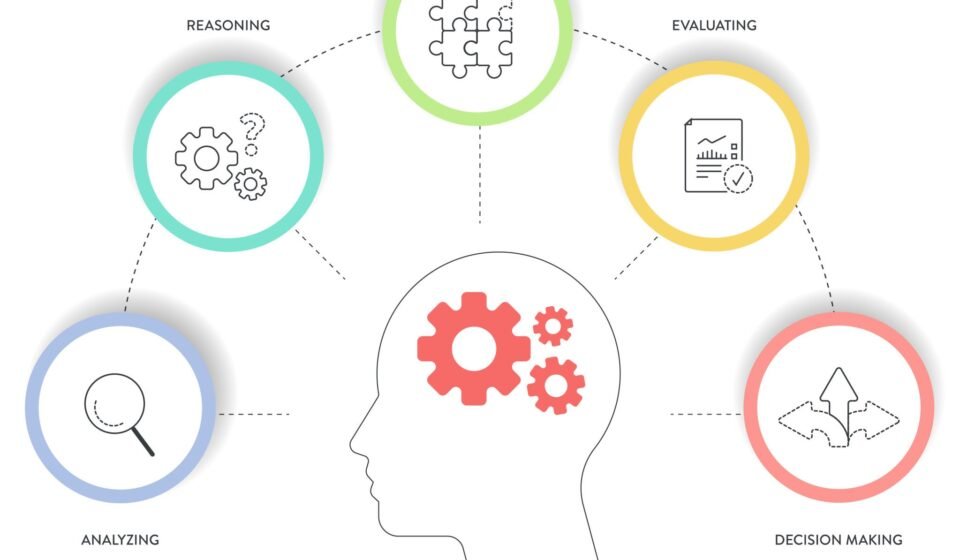

In today’s rapidly changing world, critical thinking and problem-solving skills have become essential for personal, academic, and professional success. Modern society faces complex challenges in technology, business, education, healthcare, and social development. To navigate these challenges effectively, individuals must be able to analyze information carefully, think logically, and develop practical solutions. Critical thinking and problem solving are not only important for students and professionals but also for every individual who wants to make informed decisions and contribute positively to society.
Critical thinking refers to the ability to think clearly, logically, and independently. It involves analyzing facts, evaluating evidence, questioning assumptions, and making reasoned judgments. Instead of accepting information blindly, critical thinkers examine different perspectives before reaching conclusions. Problem solving, on the other hand, is the process of identifying a problem, understanding its causes, and finding effective solutions. These two skills are closely connected because critical thinking helps people analyze problems deeply, while problem solving focuses on taking action to resolve them.
One of the main characteristics of critical thinking is curiosity. Curious individuals seek knowledge and ask questions to understand situations better. They do not simply rely on opinions or emotions but look for evidence and facts. Open-mindedness is another important trait. Critical thinkers are willing to consider different viewpoints even if they disagree with them. They understand that every issue may have multiple sides and that listening to others can improve decision-making.
Logical reasoning is also a major part of critical thinking. It allows individuals to connect ideas, identify patterns, and recognize inconsistencies. For example, when reading news on social media, a critical thinker checks whether the information comes from reliable sources instead of immediately believing or sharing it. In the digital age, where misinformation spreads quickly, critical thinking is more important than ever. People need the ability to distinguish between facts and false information.
Problem solving begins with identifying the issue clearly. Many people fail to solve problems because they misunderstand the actual cause. Effective problem solvers first gather information, analyze the situation, and then develop possible solutions. They compare the advantages and disadvantages of each option before making decisions. After implementing a solution, they evaluate the results to determine whether the problem has been resolved successfully.
There are several steps involved in the problem-solving process. The first step is recognizing the problem. Sometimes problems are obvious, while at other times they may be hidden beneath surface symptoms. The second step is analyzing the problem carefully by collecting relevant data and understanding the root causes. The third step involves brainstorming possible solutions. Creativity plays a significant role here because innovative ideas often lead to better outcomes. The fourth step is selecting the most suitable solution based on practicality, cost, and effectiveness. Finally, the chosen solution is implemented and monitored to measure its success.
Critical thinking and problem solving are essential in education. Students who develop these skills become better learners because they understand concepts deeply instead of memorizing information mechanically. Teachers encourage critical thinking by asking open-ended questions, promoting discussions, and assigning projects that require analysis and creativity. For example, instead of simply learning historical dates, students may analyze why certain events happened and how they affected society. This approach improves understanding and develops independent thinking.
In the workplace, employers highly value employees who can think critically and solve problems efficiently. Businesses often face challenges such as competition, changing customer needs, and technological advancements. Employees who can analyze situations, make informed decisions, and find innovative solutions contribute significantly to organizational success. Leadership positions especially require strong critical thinking abilities because leaders must evaluate risks, plan strategies, and solve conflicts effectively.
Technology has greatly influenced the importance of critical thinking and problem solving. With access to unlimited information through the internet, individuals must learn how to evaluate sources and verify facts. Artificial intelligence and automation are transforming industries, making routine tasks easier while increasing the demand for human skills such as creativity, reasoning, and decision-making. Machines can process data quickly, but humans are still needed to interpret information, make ethical decisions, and solve complex social problems.
Critical thinking also plays a vital role in everyday life. People make decisions daily regarding finances, health, relationships, and career choices. Poor decisions often result from emotional reactions, lack of information, or social pressure. Critical thinkers consider consequences carefully before acting. For instance, before purchasing a product online, they compare reviews, prices, and quality rather than making impulsive decisions. Similarly, when facing personal conflicts, they try to understand different perspectives instead of reacting emotionally.
Problem solving is equally important in personal life. Challenges such as financial difficulties, academic pressure, or family disagreements require calm analysis and practical solutions. Individuals with strong problem-solving skills are more confident because they believe they can overcome obstacles effectively. They remain calm under pressure and focus on finding solutions rather than complaining about problems.
Creativity is closely related to both critical thinking and problem solving. Creative individuals think outside the box and generate unique ideas. Innovation in science, business, medicine, and technology often results from creative problem solving. Famous inventions and discoveries were made by people who questioned existing methods and searched for better alternatives. Therefore, encouraging creativity in schools and workplaces can improve critical thinking and lead to progress in society.
Communication skills are also connected with critical thinking. A person may have excellent ideas, but without effective communication, those ideas may not influence others. Critical thinkers express their opinions clearly, support arguments with evidence, and listen carefully to feedback. Good communication promotes teamwork and collaboration, which are important for solving complex problems.
Despite its importance, developing critical thinking is not always easy. Many educational systems focus heavily on memorization rather than analysis and reasoning. Social media and entertainment platforms also encourage quick reactions instead of thoughtful reflection. Additionally, people often prefer information that supports their existing beliefs, a tendency known as confirmation bias. Overcoming these challenges requires conscious effort, practice, and willingness to learn continuously.
There are several ways to improve critical thinking and problem-solving skills. Reading books, participating in discussions, solving puzzles, and analyzing real-life situations can strengthen reasoning abilities. Asking questions such as “Why?”, “How?”, and “What evidence supports this idea?” encourages deeper understanding. Group activities and teamwork also help individuals learn from different perspectives. Furthermore, reflecting on past decisions and learning from mistakes can improve future problem-solving abilities.
Educational institutions and organizations should create environments that encourage questioning, creativity, and independent thinking. Students and employees should feel comfortable sharing ideas without fear of criticism. Practical learning experiences such as case studies, debates, and project-based activities are effective methods for developing these skills. Research in education highlights the growing importance of analytical and reasoning skills in modern learning environments.
In conclusion, critical thinking and problem solving are essential skills in the modern world. They help individuals make informed decisions, overcome challenges, and contribute positively to society. Critical thinking enables people to analyze information logically, while problem solving helps them find practical solutions to difficulties. Together, these skills improve academic performance, professional success, and personal growth. As technology and society continue to evolve, the ability to think critically and solve problems creatively will become even more valuable. Therefore, individuals, schools, and organizations should prioritize the development of these skills to prepare for a successful and responsible future.