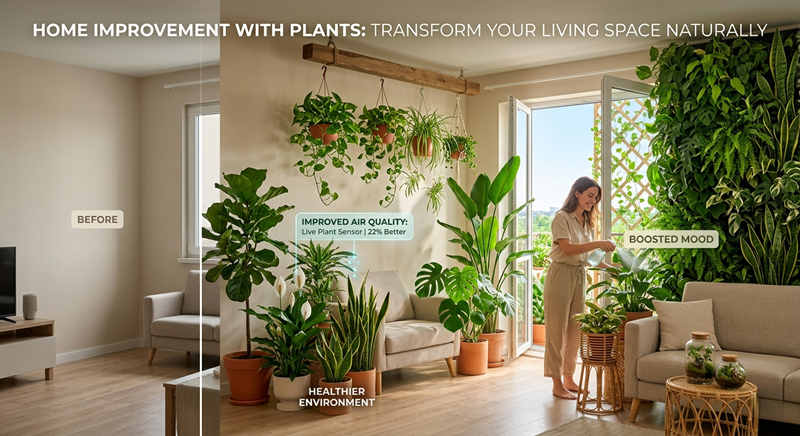

Home improvement is no longer just about expensive renovations or modern furniture—it’s increasingly about creating a healthier, more peaceful living environment. One of the simplest and most effective ways to achieve this is by incorporating plants into your home.
Plants are not only decorative elements; they are living additions that enhance both the aesthetic and functional aspects of your space. From improving mood to boosting productivity, adding greenery is a powerful yet affordable home improvement strategy.
Why Plants Are Essential in Modern Home Improvement
In recent years, indoor plants have become a major trend in interior design—and for good reason. They align with the growing focus on sustainability, wellness, and biophilic design (connecting indoor spaces with nature).
Research shows that people spend up to 90% of their time indoors, making it essential to create environments that support health and well-being.
Plants offer a natural way to bridge the gap between indoor living and the natural world.
Benefits of Adding Plants to Your Home
1. Reduces Stress and Improves Mood
Studies indicate that interacting with plants can lower stress levels and promote a sense of calm. Activities like watering or repotting plants can even reduce blood pressure and heart rate.
Simply having greenery around creates a soothing environment, making your home feel more relaxing and welcoming.
2. Enhances Air Quality
Plants are known to absorb carbon dioxide and release oxygen. Some varieties can also help reduce indoor pollutants such as benzene and formaldehyde.
While they may not replace modern air purifiers, they still contribute to fresher indoor air and a healthier atmosphere.
3. Boosts Productivity and Focus
Having plants in your living or workspace can improve concentration and creativity. Studies show that people perform better and feel more engaged when surrounded by natural elements.
This makes plants an excellent addition to home offices or study areas.
4. Improves Aesthetic Appeal
Plants instantly elevate the look of any room. Whether it’s a small succulent on a table or a large indoor palm in the corner, greenery adds life and vibrancy.
They can:
- Fill empty corners
- Add color contrast
- Complement modern or traditional decor
5. Supports Mental Well-being
Indoor gardening has been linked to improved mental health, including reduced symptoms of anxiety and depression.
Caring for plants gives a sense of responsibility and accomplishment, which positively impacts emotional well-being.
Best Types of Indoor Plants for Home Improvement
Choosing the right plants is key to maximizing benefits. Here are some popular and easy-to-maintain options:
Low-Maintenance Plants
- Snake Plant
- ZZ Plant
- Succulents
These require minimal care and are perfect for beginners.
Air-Purifying Plants
- Peace Lily
- Spider Plant
- Areca Palm
These are often recommended for improving indoor air quality.
Decorative Plants
- Monstera
- Fiddle Leaf Fig
- Rubber Plant
These make bold design statements and enhance interior aesthetics.
Creative Ways to Use Plants in Home Design
1. Vertical Gardens
If you have limited space, vertical gardens are a great solution. Wall-mounted planters or hanging pots can create a stunning green wall.
2. Corner Highlights
Place tall plants like palms or rubber plants in empty corners to make the space feel complete.
3. Tabletop Decor
Small plants on coffee tables, shelves, or desks add charm without taking up much space.
4. Bathroom Greenery
Humidity-loving plants thrive in bathrooms and can turn them into spa-like spaces.
5. Balcony Gardens
Even a small balcony can be transformed into a relaxing green retreat with potted plants and herbs.
Home Improvement on a Budget with Plants
One of the biggest advantages of using plants is affordability. Unlike expensive renovations, plants offer high impact at low cost.
Budget-friendly ideas include:
- Growing plants from cuttings
- Reusing containers as pots
- Buying local or seasonal plants
Plants provide a cost-effective way to refresh your home without major investments.
Tips for Maintaining Indoor Plants
To ensure your plants thrive, follow these simple care tips:
Light Requirements
Different plants need different levels of sunlight. Place them accordingly.
Watering
Overwatering is a common mistake. Always check soil moisture before watering.
Proper Drainage
Use pots with drainage holes to prevent root rot.
Regular Cleaning
Dust leaves occasionally to keep them healthy and attractive.
Common Mistakes to Avoid
While plants are easy to incorporate, certain mistakes can reduce their effectiveness:
- Placing plants in unsuitable lighting
- Overcrowding spaces with too many plants
- Ignoring maintenance needs
- Choosing plants that don’t suit your lifestyle
Balance is key—too many plants can make a space feel cluttered rather than calming.
The Role of Plants in Sustainable Living
Plants play an important role in eco-friendly home improvement. They:
- Reduce the need for artificial decor
- Promote natural cooling
- Encourage environmentally conscious living
Sustainable design is becoming a priority, and plants are at the center of this movement.
How Plants Influence Home Atmosphere
Plants don’t just change how a home looks—they change how it feels.
They can:
- Create a peaceful environment
- Make spaces feel more alive
- Improve overall comfort
Many homeowners report feeling happier and more relaxed in plant-filled spaces.
Future Trends: Green Homes
The future of home improvement is leaning heavily toward “green homes.” This includes:
- Indoor gardens
- Smart plant systems
- Eco-friendly materials
Plants will continue to play a major role in shaping modern living spaces.
Conclusion
Home improvement with plants is one of the simplest yet most impactful ways to transform your living space. Whether you’re looking to improve aesthetics, boost your mood, or create a healthier environment, plants offer a natural solution.
They are affordable, versatile, and suitable for any home—big or small. By choosing the right plants and placing them thoughtfully, you can turn your home into a refreshing, vibrant, and comfortable sanctuary.
In a world dominated by technology and fast-paced living, bringing nature indoors is not just a trend—it’s a necessity.